
Discovering the Birthplace of Coffee: Ethiopia
Journey to Ethiopia, the legendary birthplace of coffee. Explore the country's famous coffee regions, unique flavor profiles, processing methods, and the rich coffee culture that has captivated coffee lovers worldwide.

Ethiopia stands as the mythical birthplace of coffee, where the first coffee plant was reportedly discovered. This East African nation has been cultivating coffee for centuries, developing unique flavor profiles that coffee enthusiasts worldwide cherish. From the renowned Yirgacheffe region with its floral notes to the traditional Ethiopian coffee ceremony, this article explores everything that makes Ethiopian coffee special.
Introduction
For coffee lovers, Ethiopia is a name that evokes reverence and excitement. This ancient land is considered the cradle of coffee, where the world's first coffee plant was discovered. Today, we unravel the mysteries of coffee's birthplace and discover what makes Ethiopian coffee so exceptional.
The Legend of Coffee's Discovery
While this legend cannot be verified, Ethiopia remains the region where humans first began cultivating and consuming coffee. Today, coffee remains one of Ethiopia's most important economic crops.
Ethiopia's Major Coffee Regions
Ethiopian coffee is primarily produced in the following regions:
Yirgacheffe
- Altitude: 1,700-2,200 meters
- Flavor Profile: Known for elegant floral notes and citrus flavors
- Reputation: One of Ethiopia's most famous coffee regions
Sidamo
- Altitude: 1,500-2,200 meters
- Flavor Profile: Rich and complex with floral, fruity, and tea-like characteristics
- Reputation: Produces some of Ethiopia's finest coffees
Harar
- Altitude: 1,500-2,000 meters
- Flavor Profile: Distinctive red wine flavors and fruity aromas
- Reputation: Ancient coffee region with unique character
Limu
- Altitude: 1,100-1,900 meters
- Flavor Profile: Well-balanced with moderate acidity
- Reputation: Diverse flavor offerings
Jimmah
- Altitude: Varies
- Flavor Profile: Bold and full-bodied
- Reputation: One of Ethiopia's largest coffee-producing areas
The Unique Flavor Profile of Ethiopian Coffee
Ethiopian coffee is highly prized for its distinctive flavor characteristics:
- Floral Notes: Jasmine and rose aromas are signature features of Ethiopian coffee
- Fruity Flavors: Citrus, berries, and tropical fruit notes create complex layers
- Tea-like Quality: Some coffees exhibit red tea-like finishing notes
- Bright Acidity: Elegant and lively, reminiscent of lemon and grapefruit
Coffee Processing Methods in Ethiopia
Ethiopian coffee primarily uses two processing methods:
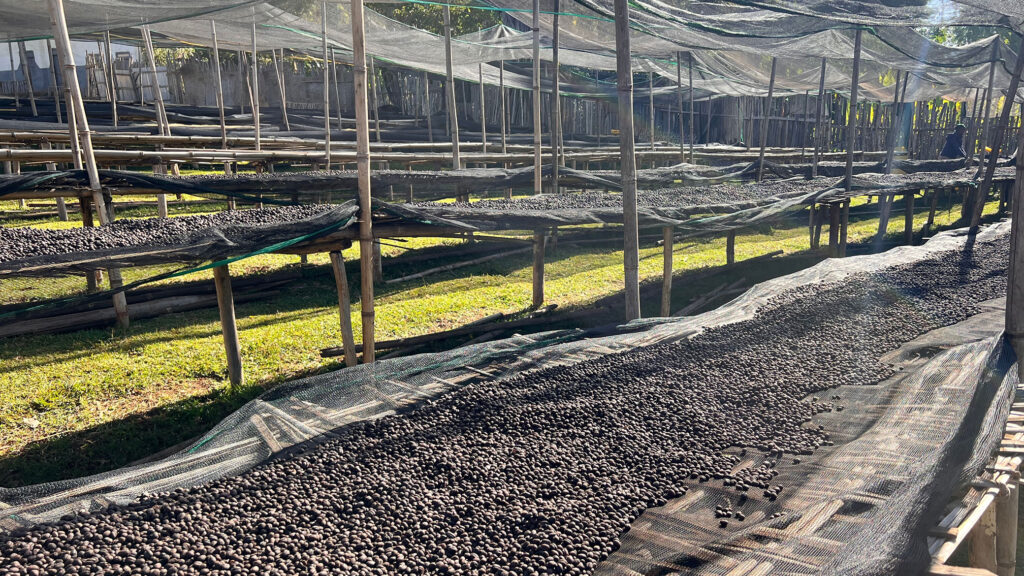
Natural Process (Sun-Dried)
Coffee cherries are dried in the sunlight directly, preserving fruit sweetness and flavor complexity. This method often results in heavier body and more pronounced fruity notes.
Washed Process
Coffee cherries are pulped and fermented in water before drying, producing cleaner cups with brighter acidity. This method highlights the coffee's floral and citrus characteristics.
Ethiopian Coffee Culture
In Ethiopia, coffee is more than a beverage – it's a social ritual. The traditional Ethiopian Coffee Ceremony (Bunna) involves several steps:
- Green beans are roasted on charcoal
- Roasted beans are ground in a mortar (mukecha and zenezena)
- Ground coffee is boiled in a clay pot called "Jebena"
- Coffee is served in handleless cups (cini) to guests
This ceremony can last several hours and represents Ethiopian hospitality and community spirit.
How to Taste Ethiopian Coffee
For the best Ethiopian coffee experience:
- Use light to medium roast to preserve floral and fruity notes
- Try pour-over or French press brewing methods
- Use higher water temperature (92-96°C / 198-205°F)
- Savor the layers of floral, fruity, and tea-like flavors
Conclusion
Ethiopian coffee captivates coffee lovers worldwide with its unique floral and fruity characteristics, along with its rich cultural heritage. As the birthplace of coffee, Ethiopia has not only preserved ancient coffee traditions but also holds a significant position in the specialty coffee world.
Next time you enjoy Ethiopian coffee, close your eyes and imagine yourself in the coffee gardens of the East African highlands, experiencing the coffee miracle that this remarkable land has produced.
Related Articles
How many processes does coffee go through from seed to cup?
Like many people, they have always been curious about how is coffee produced. What needs to happen in order for us to enjoy our favourite brew? Well, someone created an infographic entitled ‘’Coffee: From Seed to Cup’’. I glad they did.

Members of the Arabica Coffee Bean Family
Classifying coffee by genetics has always been a complicated task. For the coffee varieties encountered on the market, the most basic classification, of course, is to split them into Arabica and Robusta (hereafter referred to as Robusta beans)! Regarding the differences between Arabica and Robusta, we’ll mainly talk about the lineage divisions within the large Arabica family.

Coffee Roast Levels: Flavor & Caffeine Differences Explained
The best time to stop roasting depends on how the roaster captures the characteristics of the coffee beans. The degree of roasting should not be determined by personal preference. For example, Cuban coffee beans have thin pulp and a unique acidity and aroma.