
Coffee Roast Levels: Flavor & Caffeine Differences Explained
The best time to stop roasting depends on how the roaster captures the characteristics of the coffee beans. The degree of roasting should not be determined by personal preference. For example, Cuban coffee beans have thin pulp and a unique acidity and aroma.
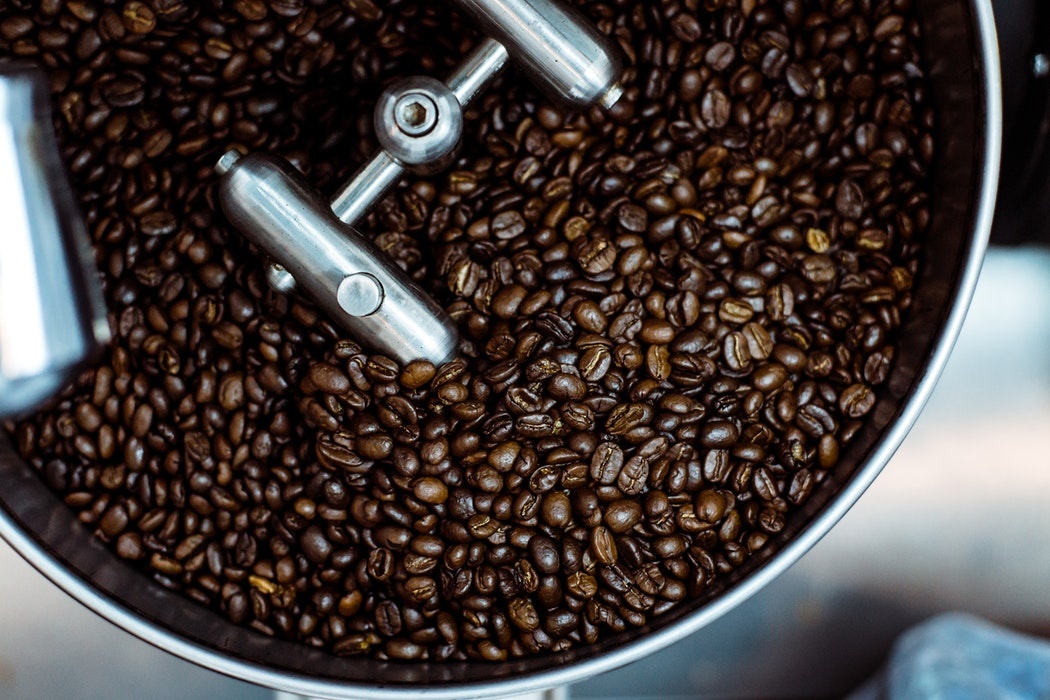
The most challenging aspect of roasting is determining the optimal time to stop; without stopping at the right moment, the flavor of the coffee beans will inevitably be affected.
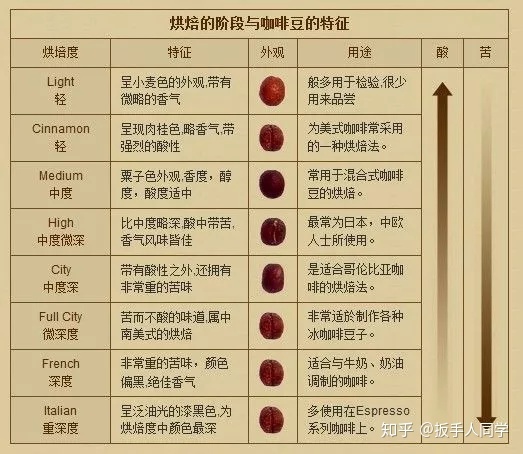
The best time to stop roasting depends on how the roaster captures the characteristics of the coffee beans. The degree of roasting should not be determined by personal preference. For example, Cuban coffee beans have thin pulp and a unique acidity and aroma. A medium to high-medium roast is most effective in removing astringency and producing coffee with an unparalleled, refined acidity and sweet aroma. However, if a French roast is used, the flavor becomes hollow and the coffee beans are ruined. On the other hand, if Kenyan coffee beans, which have thick pulp and high moisture content, are lightly roasted or given a cinnamon roast, the resulting coffee may be too acidic to drink.
While technically, any coffee can be roasted to a light or dark degree, to bring out the best flavor, it is essential to choose the appropriate roasting level based on the type and characteristics of the coffee beans.
Therefore, from light roast to Italian roast, each roasting level should be experienced once for every type of coffee bean, and you should confirm with your own taste and smell, note down the flavor of each coffee bean at each roasting stage, and find the optimal time point that best highlights the characteristics of that bean.
There are various types of coffee beans on the market from different origins and roasted to different degrees. Roasting coffee beans produces hundreds of flavor compounds, which is why coffee captivates so many people.
Generally, the deeper the roast, the stronger the bitterness, and the lighter the roast, the more pronounced the acidity.
Introduction to Roasting Levels
1. Light Roast / Cinnamon Roast (Light Roast)
This roast level emphasizes acidity, which is not very popular recently.
"Light Roast" refers to coffee beans roasted to just before the first crack; "Cinnamon Roast" is roasted to about the middle of the first crack. The challenge with this roast level is not only to highlight acidity but also to eliminate astringency and wrinkles. Therefore, it is best to use high-maturity, high-refinement Caribbean coffee beans such as those from Cuba, Haiti, or the Dominican Republic, which have less astringency.
This roast level is most suitable for low-altitude coffee beans with thin pulp and low moisture content, and can also be applied to coffee beans that have been aged for more than two years and have excellent dryness.
2. Medium Roast/High Roast (Medium Roast)
This roast level allows the coffee beans to release the characteristic aroma and fragrance of coffee.
"Medium roast" refers to roasting the beans until the end of the first crack; "high roast" involves roasting until the beans develop wrinkles and their aroma changes. This roast level is suitable for Caribbean coffee beans with low moisture content or Brazilian coffee beans processed using the natural drying method. Lowland coffee beans, which lack a rich flavor profile, are more suitable for this roast level compared to highland coffee beans like Colombian or Kenyan, which possess complex, multi-layered flavors.
3. City Roast/Full City Roast (Medium-Dark Roast)
Neither too bitter nor too sour, this roast level best showcases the multi-layered flavors of coffee.
This roast level has won over Americans who were originally fond of light roasts, and it is also almost exclusively used for Italian espresso. "City Roast" refers to roasting coffee beans until the second crack, while "Full City Roast" is roasted just as the second crack ends. It is suitable for coffee beans with strong characteristics, such as Mandheling, Hawaiian, and Kona.
4. French Roast/Italian Roast (Dark Roast)
The bitterness is pronounced, with a simple flavor, and some beans may have a smoky taste. It is suitable for high-altitude coffee beans with thick pulp and strong acidity.
"French Roast" refers to coffee beans that are roasted to a dark brown with a hint of black, while "Italian Roast" involves roasting the beans to a completely black state. Examples include coffee beans from Kenya, Colombia, and Guatemala. Although called "Italian Roast," the roasting level for Espresso in Italy has actually trended toward lighter roasts, with more recent practices favoring City Roast or Full City Roast.
5. Eight-Stage Roasting Levels
The "Agtron" method developed by the Specialty Coffee Association of America (SCAA) is used to classify coffee bean roasting levels. Agtron, also known as a caramelization analyzer or "Agtron meter," is an optical instrument that measures the roasting level of coffee using infrared wavelengths. This device assesses the degree of caramelization of sugars inside the coffee beans and presents the data in a quantifiable manner.
Does roasting destroy caffeine?
I once read an article online that claimed roasting destroys caffeine, so coffee beans with a darker roast have lower caffeine content. It even suggested that heavily roasted Italian coffee beans are suitable for drinking before bed because they contain very little caffeine and thus hardly affect sleep. Is this really true?
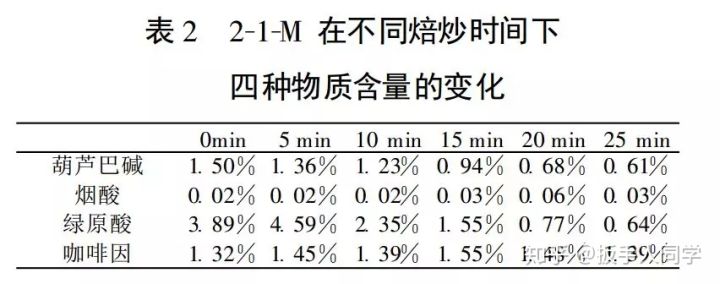
Here are a few experiments: In 2003, Cai Ruiling and others measured the changes in various chemical components of two types of Yunnan coffee beans after roasting for 5 to 25 minutes. They found that whether it was light or dark roasting, the caffeine content did not change significantly, remaining around 1.4%:
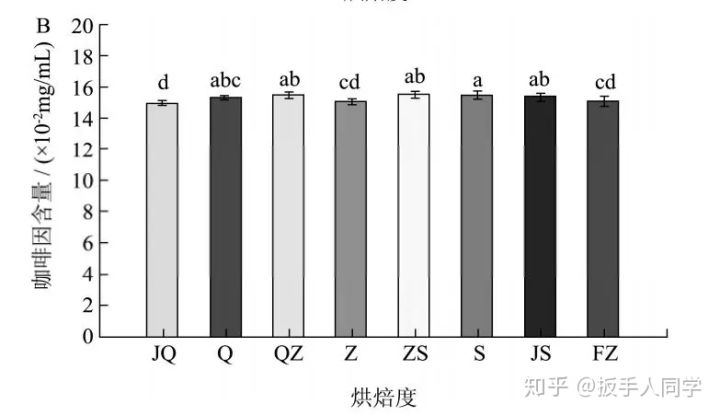
In 2017, Yu Miao and others selected coffee beans harvested from Hainan to study the chemical components in the beans under different roasting conditions. The roasting conditions included: very light (JQ); light (Q); light-medium (QZ); medium (Z); medium-dark (ZS); dark (S); very dark (JS); and French heavy (FZ). They also found that the caffeine content did not change significantly:
In addition to domestic research, many international studies also indicate that caffeine does not change much with the degree of roasting. For example, in 1985, Macrae and others observed this phenomenon and provided an explanation. In 2000, Casal and others conducted varying degrees of roasting on Brazilian Arabica and Ivorian Robusta coffee beans and also found no significant changes in caffeine content.
In addition to some experiments not listed, we can say with relative certainty that caffeine has little to do with the degree of roasting.
So what factors are related to caffeine?
First, it certainly has a lot to do with the coffee-growing region. In 2017, Li Shasha and others studied the caffeine content in coffee beans from Jamaica Blue Mountain, Brazil, Mandheling, Colombia, and Hawaii, with the following results:
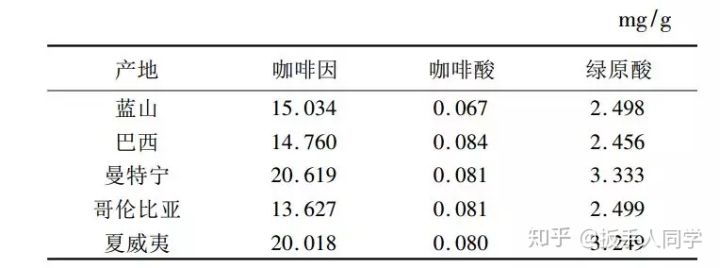
It can be seen that the caffeine content in coffee beans from different origins varies significantly. Different origins have different climates and nutritional environments, so it is understandable that the components in coffee beans differ.
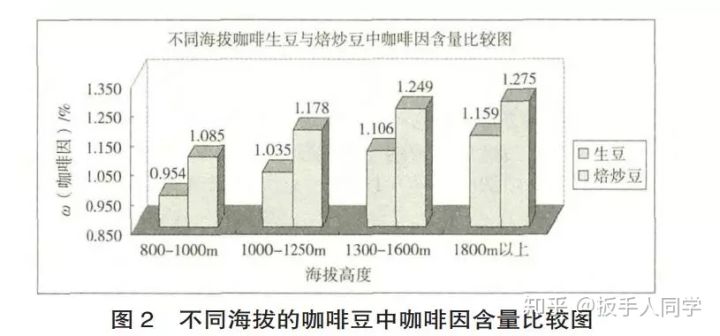
In 2018, Zhang Shaolong and others studied coffee beans from several different regions in Yunnan and found that the caffeine content in coffee beans increased with the elevation of the origin, which is an interesting conclusion. The change in altitude primarily reflects variations in temperature. The higher the altitude, the lower the temperature, leading to a longer growth cycle for coffee beans, which allows more time for nutrient accumulation, making this finding quite understandable. However, in some other studies, completely opposite results have been observed.
Related Articles
How many processes does coffee go through from seed to cup?
Like many people, they have always been curious about how is coffee produced. What needs to happen in order for us to enjoy our favourite brew? Well, someone created an infographic entitled ‘’Coffee: From Seed to Cup’’. I glad they did.

Members of the Arabica Coffee Bean Family
Classifying coffee by genetics has always been a complicated task. For the coffee varieties encountered on the market, the most basic classification, of course, is to split them into Arabica and Robusta (hereafter referred to as Robusta beans)! Regarding the differences between Arabica and Robusta, we’ll mainly talk about the lineage divisions within the large Arabica family.
Top 10 Coffee-Producing Countries: How Many Do You Know?
Around the world, coffee is a beloved beverage that fills every moment of life. Whether at home, in the office, or in various social settings, people are savoring coffee—it is closely linked with fashion and modern living. So, how well do you know coffee? Which country produces the best-tasting coffee in the world? For most people, this question may only be vaguely understood, but to provide a global ranking, professional insights are needed.