
Members of the Arabica Coffee Bean Family
Classifying coffee by genetics has always been a complicated task. For the coffee varieties encountered on the market, the most basic classification, of course, is to split them into Arabica and Robusta (hereafter referred to as Robusta beans)! Regarding the differences between Arabica and Robusta, we’ll mainly talk about the lineage divisions within the large Arabica family.

Classifying coffee by genetics has always been a complex matter. As for the coffee varieties commonly encountered in the market, the most basic classification is, of course, dividing them into Arabica and Robusta (hereinafter referred to as "Robusta beans")! Regarding the differences between Arabica and Robusta beans, let's mainly discuss the lineage divisions within the large Arabica family.
The two ancestral families
Typica: The name "Typica" sounds strong and mighty, but in fact, it is not that resilient... It has a weaker constitution, poor disease resistance, is susceptible to leaf rust, and produces relatively few beans. It is one of the oldest native varieties in Ethiopia, and many Arabica varieties are derived from Typica! One characteristic of Typica is its bronze-colored top leaves, and its beans are larger, with a pointed oval or slender shape. Well-known varieties such as Mandheling, Blue Mountain, Maragogype, Kona, and Yunnan Small Round Bean... are all derived from Typica.
Bourbon: Bourbon is an ancient and excellent variety that stands alongside Typica. Some botanists believe that Bourbon is a mutation of early Typica after it was transplanted to Yemen. Bourbon beans are almost exclusively round in shape, slightly smaller than Typica beans, and mature later, but their yield is about 30% higher than Typica. They are suitable for cultivation at altitudes above 1,200 meters, where their flavor is noticeably more prominent than at altitudes below 1,000 meters. However, Bourbon has a drawback: it produces fruit one year and rests the next. The round-bodied Bourbon is vigorous and has better resistance to leaf rust than Typica, but its flavor is no less impressive—it may even be superior. In 1810, some of the round beans on the island of Bourbon mutated into pointed beans, giving rise to the famous "Pointed Bourbon." Its distinguishing feature is that its caffeine content is only half that of other varieties, and it is characterized by low yield, a weak constitution, and extreme rarity—like a frail, aristocratic young beauty...
Additionally, the biggest commonality between Typica and Bourbon is that both require the protection of shade trees. Without the shade trees to block the intense sunlight, not only is their growth hindered, but the flavor of the coffee beans produced is also significantly diminished.
Genetic Mutations: The Variants of the Bourbon Family
Kenya: "SL28" and "SL24" are direct Bourbon descendants selected and cultivated by French and British missionaries and researchers in Kenya in the early 20th century. Over the past century, they have adapted to the high-phosphate soil in Kenya, giving rise to Kenyan beans with a unique, vibrant acidity and aroma, distinct from Bourbon beans from Central and South America. However, when transplanted to Asia, they lose their distinctive characteristics and fail to showcase their unique qualities.
Yellow Bourbon: "Bourbon Amarello" is a unique Bourbon variant with yellow skin, found specifically in the state of São Paulo, Brazil. While most coffee cherries turn red when ripe, Yellow Bourbon remains orange-yellow upon maturity, hence its name. Yellow Bourbon has become a rising star in the specialty coffee world, as it has almost consistently swept the top three awards in the "Cup of Excellence" competition.
Caturra: "Caturra" is a single-gene mutation of Bourbon discovered in Brazil in the 1950s. It has better yield potential and disease resistance than Bourbon, and the plants are shorter, making harvesting easier. Unfortunately, it shares the same issue as Bourbon—bearing fruit one year and resting the next. Its flavor is comparable to or slightly inferior to Bourbon beans. However, it is more adaptable, can be densely planted, and does not require shade trees, thriving even when directly exposed to intense sunlight. Hence, it is also known as "Sun Coffee." Caturra is suitable for altitudes ranging from 700 meters to 1,700 meters, but the higher the altitude, the better the flavor, though the bean yield decreases accordingly. There is also a mutated yellow Caturra in Central and South America, but it is not as highly regarded as Yellow Bourbon.
Pacas: Pacas, in 1935, Salvadoran coffee farmer "Don Alberto Pacas" selected a high-yielding San Ramón Bourbon variety for cultivation on his farm. In 1956, his coffee trees produced a higher yield than other trees of the same variety. Professor "Dr. William Cogwill" from the University of Florida confirmed that this was a genetic mutation of Bourbon and named it "Pacas." Pacas is known for its high yield and excellent quality, making it quite popular in Central America. Currently, 68% of coffee in El Salvador belongs to the Bourbon variety, with Pacas accounting for 29%.
Varieties of the Typica Family
Maragogype: Discovered in the "Maragogype" region of northeastern Brazil's "Bahia" in 1870, it earned its name because its beans are at least three times larger than those of typical Arabica, making them the largest in the world. It is the most famous mutant variety of Typica, the giant baby of the Typica family. Maragogype adapts well to low-altitude areas of 700–800 meters, but its flavor is unremarkable and lacks distinctiveness, sometimes even having a muddy taste. Therefore, it is better to select regions with altitudes above 1,000 meters for better flavor, with mild acidity and pleasant sweetness.
Kona: Although cultivated at an altitude of a few hundred meters, Kona from the Big Island of Hawaii, with its gentle sea breezes and fertile volcanic soil, boasts an exceptionally clean acidity and sweetness. It is even considered superior to Blue Mountain, which grows at higher altitudes.
Blue Mountain: Blue Mountain, a global sensation that is hard to come by even a single bean, originates from the Typica family. Why is Blue Mountain so expensive?! Largely because most of it is monopolized by the Japanese market, and another reason is that once it leaves Jamaica, it struggles to adapt and often underperforms. After two centuries of domestication, Blue Mountain has successfully evolved in Jamaica, with better resistance to coffee berry disease compared to ordinary Typica. Where will Blue Mountain be tamed next? We can look forward to it~
The Hybrid of Two Major Families
Mundo Novo: Bourbon and Typica had an affair! A hybrid of the two major families emerged! It was first discovered in Brazil, known for its high yield and strong disease resistance. The only downside is that its trees can grow over 3 meters tall, making harvesting difficult. Due to its excellent cupping quality, it is hailed as the new hope for Brazil's coffee industry, hence the name "Mundo Novo" (New World).
Catuai: "Catuai" is a hybrid of Mundo Novo and Caturra, making it a second-generation hybrid. It inherits the advantage of Caturra's low tree height and compensates for the weakness of Arabica's fragile fruit. The fruit is solid and less likely to fall off in strong winds. The biggest regret is that its overall flavor profile is slightly more monotonous than Caturra's. Catuai also comes in red and yellow fruit varieties, with red-fruited Catuai winning awards more frequently than yellow-fruited ones. Catuai, Caturra, Mundo Novo, and Bourbon are considered Brazil's four main coffee varieties.
Pacamara: "Pacamara" is the offspring of the Typica mutation Maragogipe and the Bourbon mutation Pacas—another hybrid, with bean size second only to Maragogipe. In 2007, it won the "CoE" double championship in Guatemala and Honduras, and also swept the top three awards in El Salvador, making it a rising star in El Salvador.
The Illegitimate Children with Robusta
Timor: On the island nation of East Timor at the eastern end of the Lesser Sunda Islands, a hybrid of Arabica and Robusta (oh, you two actually...)—Timor, which is closer to Arabica—was discovered. Timor has low acidity and lacks distinctive characteristics, and it is commonly used in Taiwan as a blend bean to reduce costs. Sigh, the importance of genetics... However, East Timor also has high-altitude pure Typica processed through washing. Before purchasing, it is essential to clarify whether it is a hybrid or pure Typica washed beans, as there is a significant difference in quality between the two—the former is mediocre, while the latter is exceptionally impressive.
Catimor: In 1959, the Portuguese transplanted the Bourbon variety Caturra to East Timor and crossbred it with Timo, which has Robusta lineage, resulting in the second-generation hybrid Catimor, known for its exceptional disease resistance and yield. Although Catimor inherited the robust advantages of Robusta, it also inherited the gene for poor flavor. In recent years, to improve the negative reviews of Catimor's cupping performance, botanists from various countries have re-engaged in multiple crossbreeding efforts between Arabica and Catimor, attempting to reduce the Robusta lineage.
Icatu: In the past, Arabusta, a hybrid of Arabica and Robusta, improved yield and disease resistance but consistently suffered from poor coffee flavor. Scientists then further crossbred Arabusta with Arabica varieties such as Caturra, Mundo Novo, and Bourbon over multiple generations. This gradually reduced the undesirable flavors of Robusta and enhanced the aromatic richness of Arabica beans, giving rise to the excellent multi-generation hybrid variety—Icatu.
In addition, other hybrids of Arabica and Robusta include "Ruiru 11," "Chandragiri," and more. Generally, these hybrids inherit the robust disease resistance of Robusta but compromise the flavor profile of Arabica.
Related Articles
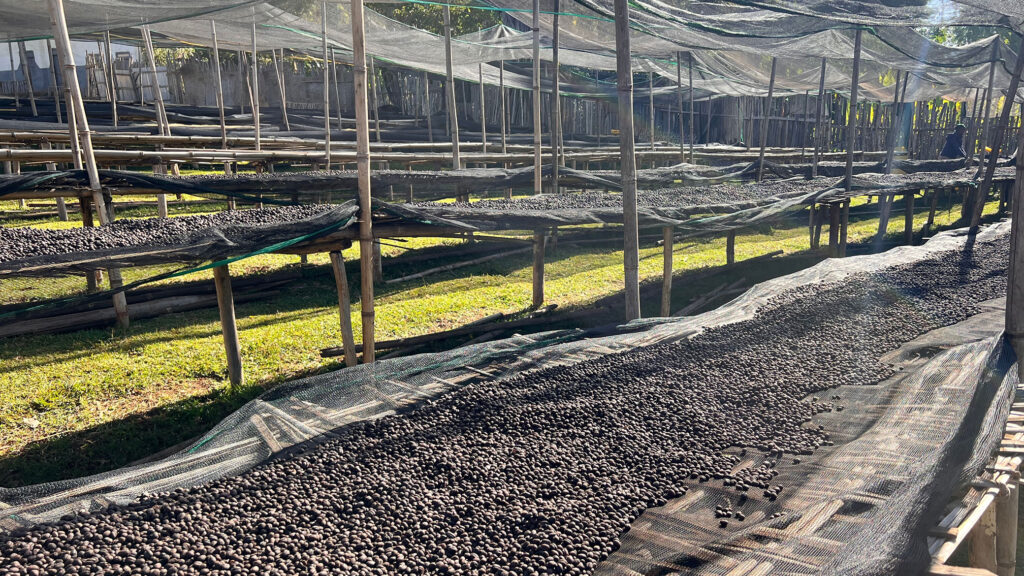
How many processes does coffee go through from seed to cup?
Like many people, they have always been curious about how is coffee produced. What needs to happen in order for us to enjoy our favourite brew? Well, someone created an infographic entitled ‘’Coffee: From Seed to Cup’’. I glad they did.
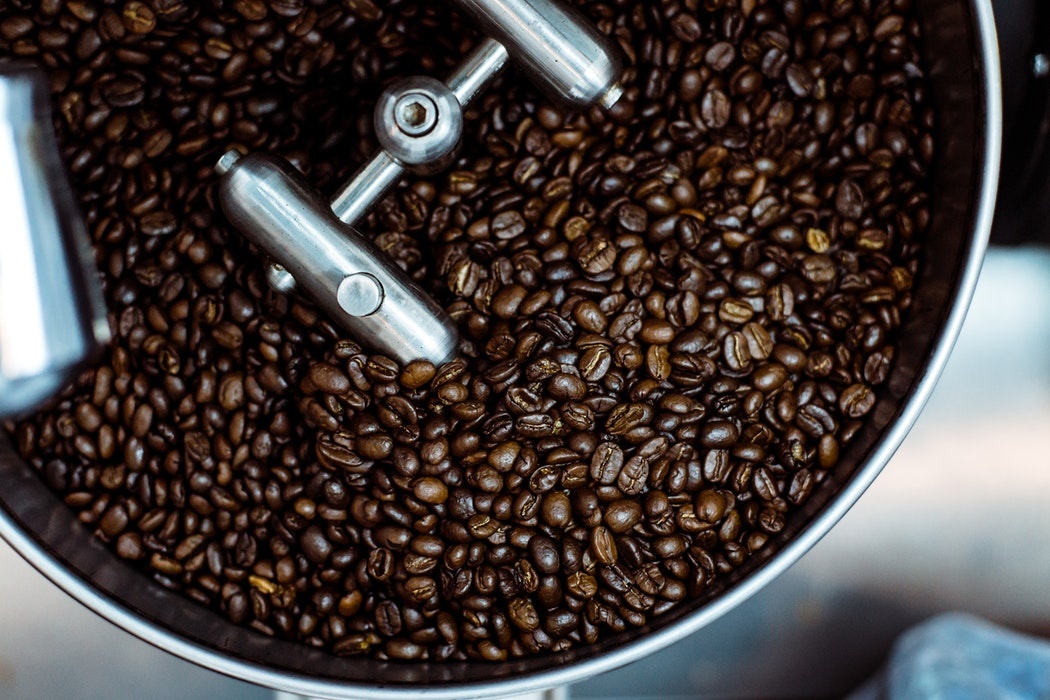
Coffee Roast Levels: Flavor & Caffeine Differences Explained
The best time to stop roasting depends on how the roaster captures the characteristics of the coffee beans. The degree of roasting should not be determined by personal preference. For example, Cuban coffee beans have thin pulp and a unique acidity and aroma.
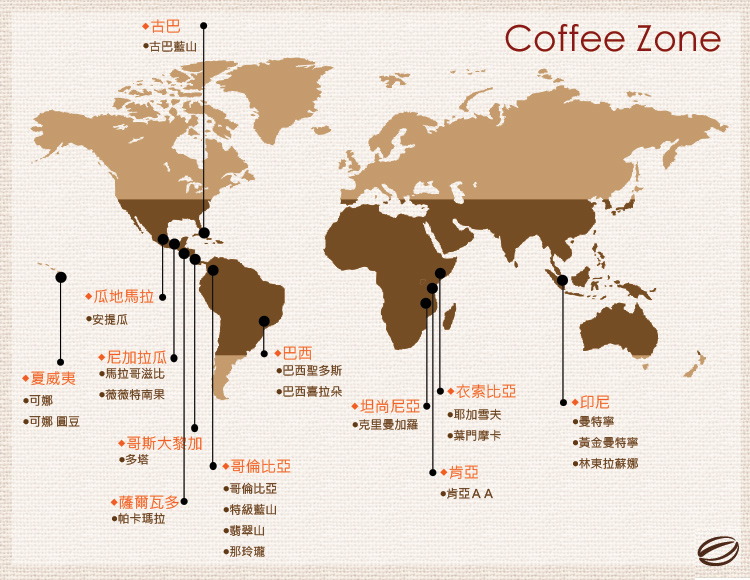
Top 10 Coffee-Producing Countries: How Many Do You Know?
Around the world, coffee is a beloved beverage that fills every moment of life. Whether at home, in the office, or in various social settings, people are savoring coffee—it is closely linked with fashion and modern living. So, how well do you know coffee? Which country produces the best-tasting coffee in the world? For most people, this question may only be vaguely understood, but to provide a global ranking, professional insights are needed.