
Why Are Natural-Processed Coffee Beans Sweeter?
Natural-processed coffee beans taste sweeter than washed beans primarily due to fermentation and lower sugar loss. During natural processing, beans dry inside the fruit, allowing aromatic compounds from fermentation (like butyl butyrate) to penetrate and enhance perceived sweetness. In contrast, washed processing involves soaking beans in water, tricking them into pre-germination mode and consuming sugar. Washed beans, however, offer cleaner, more complex flavors due to controlled production and amino acid development.

For coffee lovers, do you know that coffee cherries need to be processed to remove the pulp, outer skin, and parchment layer to obtain green coffee beans? The processing method (such as natural/dry processing) affects the flavor of the coffee beans because certain chemicals from the fermented pulp seep into the beans, and different environments also influence the condition of the beans.
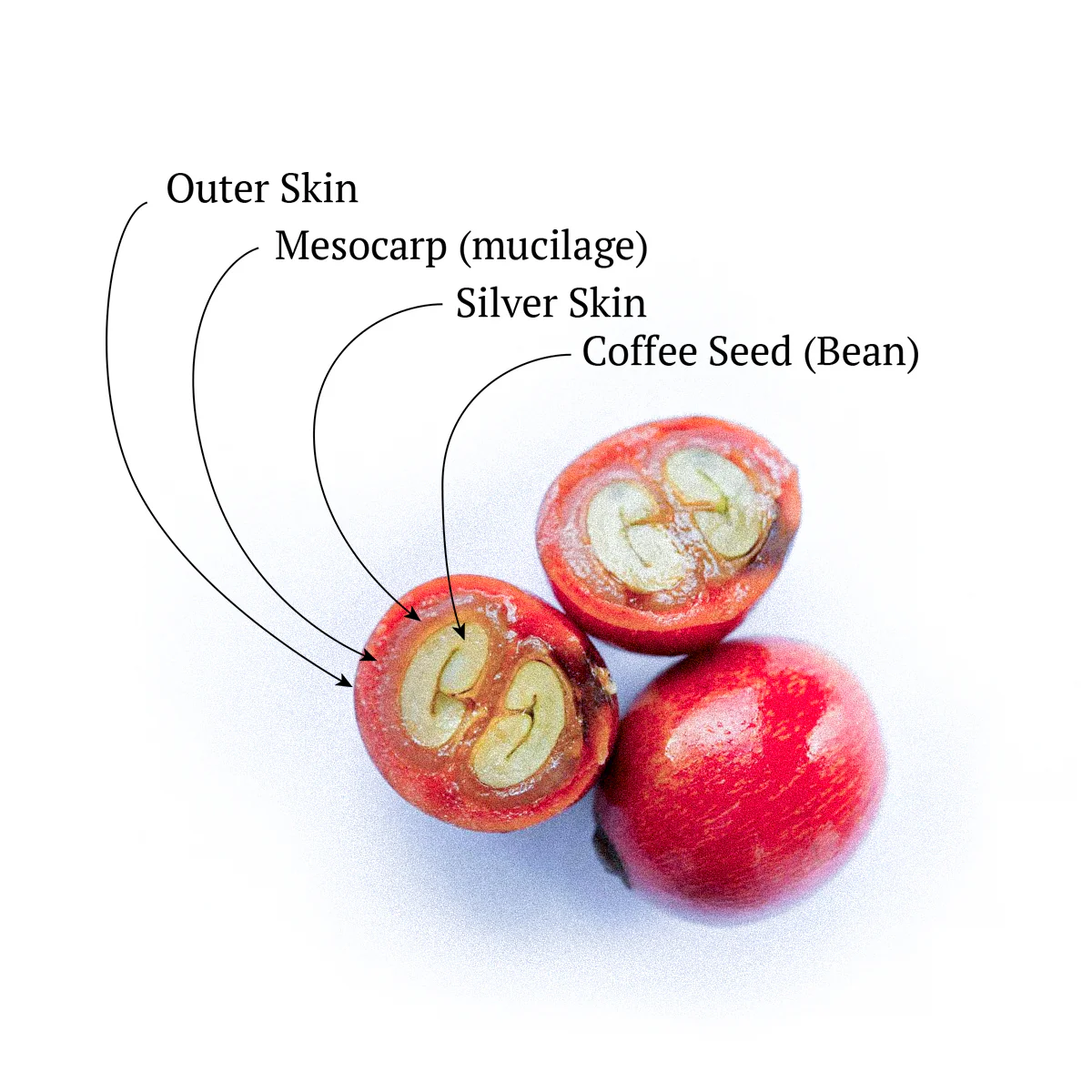
The most well-known processing methods are natural processing and washed processing:
- Washed processing produces beans with stable quality, a clean taste, and a brighter acidity.
- Natural processing, on the other hand, results in sweeter beans with more fruity notes.
How does this happen?
Let’s quickly review natural processing and washed processing.
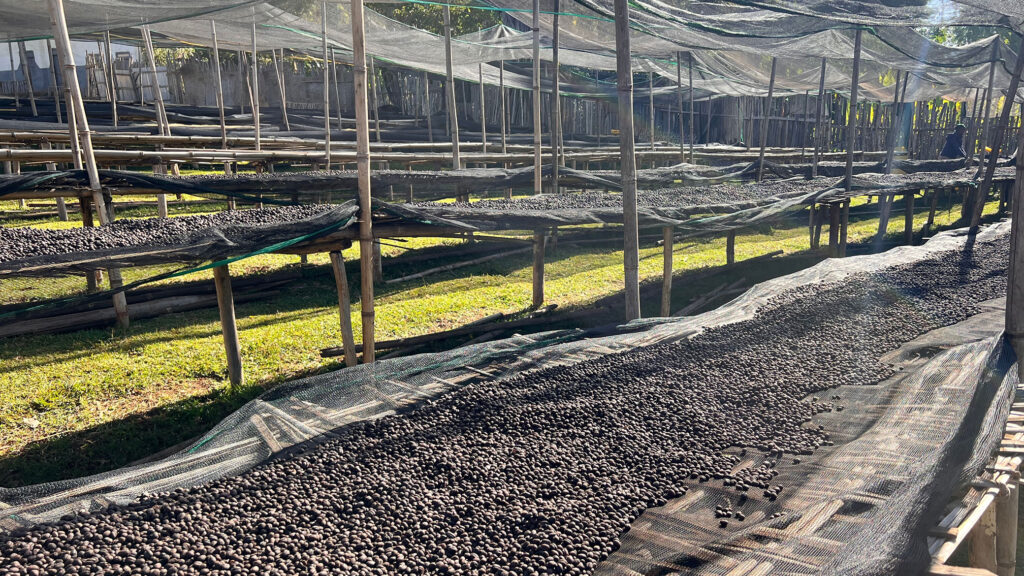
Because coffee cherries have skin, pulp, mucilage, and parchment, it’s not easy to simply use machines to extract the beans directly. As a result, people have developed various methods to obtain the beans. The natural method is the oldest: the coffee cherries are dried in the sun for several weeks, turned regularly, and once dried, it becomes easier to use a hulling machine to remove the outer layers and retrieve the beans.
In contrast, the washed method involves using machines to remove the skin and pulp first. The beans, still coated with mucilage, are then placed in water, where microorganisms consume the mucilage. After this process, the beans are washed again, dried in the sun, and finally hulled to remove the parchment and obtain the beans.
Why are naturally processed coffee beans sweeter and more fruity?
Analysis shows that naturally processed coffee beans contain more sucrose and fructose than washed beans. However, this isn’t because the sun drying or fermentation process creates more sugar. Instead, it’s because the washing process reduces the sugar content in the beans!
Why is that? Let’s start with how plants work. The role of seeds or beans is to find a suitable environment to germinate and grow into a new plant.
During the washed process, when the beans are soaked in water, they may mistakenly perceive the environment as ideal for germination. This triggers chemical changes within the beans, consuming some of their sugar. So, even if they don’t actually sprout, they still lose sugar.
If the sugar content doesn’t increase, why do naturally processed beans taste sweeter?
This is because the fermentation of the pulp produces aromatic compounds that seep into the beans. Among these, butyl butyrate helps people perceive more sweetness when drinking the coffee.
Additionally, the higher sugar content in green beans from natural processing can generate more floral and fruity notes during roasting.
Washed coffee beans have their own unique qualities!
At first glance, it might seem like washed beans are overshadowed by naturally processed beans. But that’s not the case! Because the washed process allows for better control, it consistently produces high-quality beans with the clean, elegant flavor profile they’re known for. In fact, washed beans often have more complex flavors! The process of consuming sugar during germination-like conditions produces amino acids, which can develop into layered aromas during roasting.
Related Articles
How many processes does coffee go through from seed to cup?
Like many people, they have always been curious about how is coffee produced. What needs to happen in order for us to enjoy our favourite brew? Well, someone created an infographic entitled ‘’Coffee: From Seed to Cup’’. I glad they did.

Members of the Arabica Coffee Bean Family
Classifying coffee by genetics has always been a complicated task. For the coffee varieties encountered on the market, the most basic classification, of course, is to split them into Arabica and Robusta (hereafter referred to as Robusta beans)! Regarding the differences between Arabica and Robusta, we’ll mainly talk about the lineage divisions within the large Arabica family.
Coffee Roast Levels: Flavor & Caffeine Differences Explained
The best time to stop roasting depends on how the roaster captures the characteristics of the coffee beans. The degree of roasting should not be determined by personal preference. For example, Cuban coffee beans have thin pulp and a unique acidity and aroma.