
Top 10 Coffee-Producing Countries: How Many Do You Know?
Around the world, coffee is a beloved beverage that fills every moment of life. Whether at home, in the office, or in various social settings, people are savoring coffee—it is closely linked with fashion and modern living. So, how well do you know coffee? Which country produces the best-tasting coffee in the world? For most people, this question may only be vaguely understood, but to provide a global ranking, professional insights are needed.
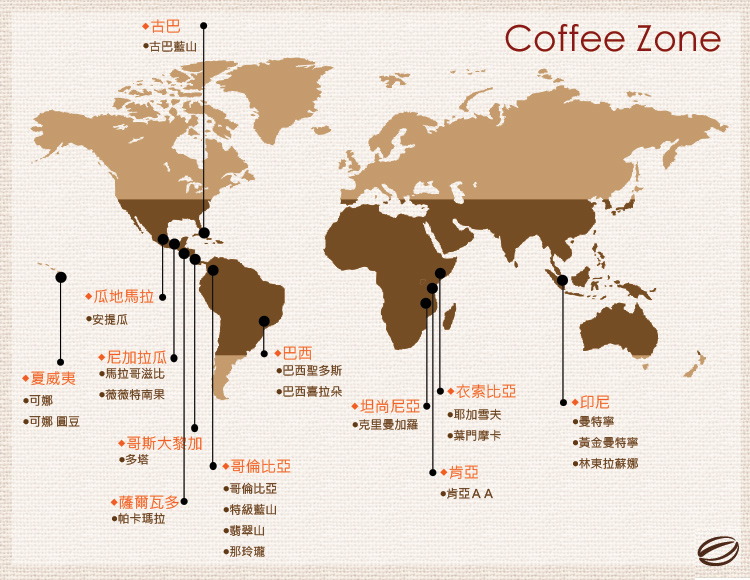
Around the world, coffee is a beloved beverage that fills every moment of life. Whether at home, in the office, or in various social settings, people are savoring coffee—it is closely linked with fashion and modern living. So, how well do you know coffee? Which country produces the best-tasting coffee in the world? For most people, this question may only be vaguely understood, but to provide a global ranking, professional insights are needed.
How many of the world's top ten coffee-producing countries are you familiar with? Let’s now take a brief look at each producing region one by one.
1. Ethiopia—The Original Taste of Coffee
- Annual production: 396,000 tons
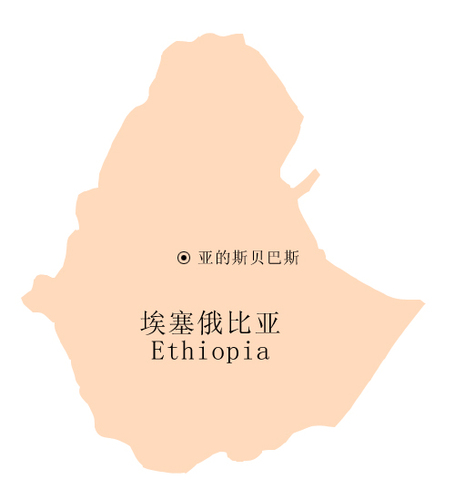
"A washed Yirgacheffe brings out exquisite floral aromas and sweet fruit flavors that are simply unparalleled; or a naturally processed Sidamo, which is sweet and bold, both representing the most classic, top-tier examples of Ethiopian coffee." – Lorenzo Perkins, Education Director at Cuvée Coffee
Ethiopia is the renowned birthplace of Arabica coffee beans, where people still maintain the tradition of harvesting wild coffee beans. Coffee plantations at elevations above 1,500 meters, after over a thousand years of evolution and adaptation, have developed a unique coffee terroir. Ethiopian coffee grown in wild, natural environments is referred to as "wild coffee," preserving the most primitive and natural flavors of the beans and expressing the terroir in the most direct and full-bodied way.
It’s worth mentioning that most coffee in Central and South America consists of introduced varieties, while Ethiopia remains a rare place of origin, with countless native wild varieties yet to be discovered.
Among Ethiopia's nine major coffee-producing regions, Sidamo and Yirgacheffe stand out the most. Yirgacheffe was originally a sub-region of Sidamo but was separated due to its distinctive flavor profile. Its rich and complex fruity aroma made it an overnight international sensation, becoming highly sought after by connoisseurs and commanding a premium price.
2. Kenya: An unforgettable coffee experience
- Annual production: 45,000 tons
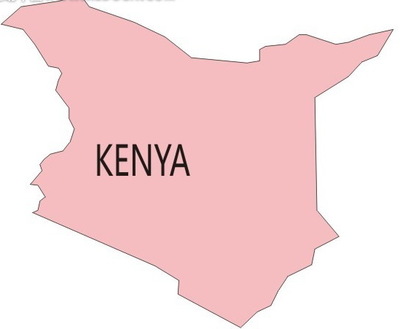
"If I had to choose only one coffee to drink for the rest of my life, I would choose Kenyan coffee." -- Brian Jones, author of the renowned professional coffee website DearCoffee, I Love You
Kenya's coffee history is not long, with the introduction of Arabica coffee varieties beginning in the early 20th century, followed by increased cultivation of the Bourbon variety from Brazil. During the early British colonial period, a comprehensive cultivation management system was established for Kenya's coffee industry. The lower temperatures in Kenya's high-altitude mountainous regions extend the maturation period of coffee beans, allowing them to fully develop complex aromatic notes. The bold acidity and rich fruity flavors, such as blackcurrant and grapefruit, define the robust and mature character of Kenyan coffee.
Kenya places greater emphasis on the cultivation of coffee varieties, and the SL28, developed by a professional research team, is a direct descendant of Bourbon coffee beans, representing the highest quality and flavor of Kenyan coffee.
3. Colombia - The Joy of Exploring Diversity
- Annual Production: 660,000 tons
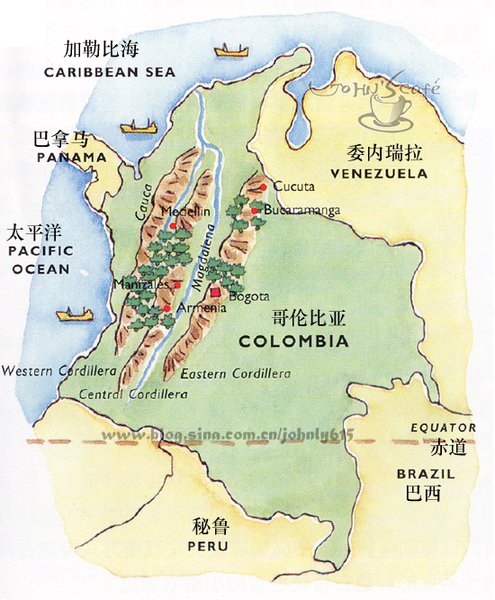
"Many small coffee farmers in Colombia independently cultivate, harvest, and process their beans, producing some exciting single-origin coffees whose quality reflects the farmer's craftsmanship as well as the distinct terroir from which they hail."----Madcap Coffee Manager Ryan Knapp
The greatest characteristic of Colombian coffee is its stylistic diversity. If compared to wine, it resembles the Champagne region where large houses coexist with small growers, offering both standardized, stable styles and intriguing, variable small-batch stars. Overall, Colombian coffee is known for its fresh, clean profile and rich fruitiness. Colombian coffee producers possess highly professional roasting techniques, allowing the quality of the coffee beans to be fully expressed.
4. Guatemala: The delightful rising star
- Annual production: 186,000 tons
"Coffee from this small Central American country has been performing exceptionally well in recent years: harmonious, sweet, soft, and full of aroma. Tasting it is like exploring its roots (Mayan culture)." ----Bill Walsh, PureCoffee Blog
Guatemalan coffee, with its unique style, has recently risen to become one of the world's renowned coffee-producing regions. Grown in the cool volcanic highlands, the coffee beans develop complex layers of aroma and a rich, full-bodied flavor, evoking the ancient Mayan culture of the region—deep, enduring, and imbued with a sense of mystery.
5. Costa Rica: Great mountains, great water, great coffee
- Annual production: 84,000 tons
"My love for Costa Rica comes from its warm people, beautiful scenery, and, of course, its amazing coffee."----Roast Magazine Publisher Connie Blumhardt
Costa Rican coffee beans are primarily Arabica, processed using the washing method, with a bright style, mild acidity, and excellent sweetness. The Costa Rican Coffee Association uniformly manages the country's coffee industry and has established specialized research institutions to explore and improve the quality of local coffee.
6. Honduras—A Proud Product in Troubled Times
- Annual production: 252,000 tons
"An outstanding origin in Central America, with two major brands located on either side of the mountain range, presenting distinctly different styles. El Cielito's César Fernandez's coffee offers fruity aromas such as red berries, raisins, and apricots, while San Luis Plane's Mariano Mejía's coffee leans more toward flavors of green tea, red currants, and hazelnuts."---- Cheryl Kingan, Coffee Buyer at Cafe Grumpy
Unrest may have made Honduras seem like an obscure coffee region, but it is actually one of Central America's main coffee exporters, second only to Guatemala in export volume.
7. Seventh place, Indonesia: Seems like you can forget about civet coffee too
- Annual production: 702,000 tons
"Coffee producers in Java and Bali focus on cultivating and processing specific varieties of coffee beans, striving for excellence in craftsmanship." -- David Buehrer, Greenway Coffee
Indonesia is not only home to the controversial civet cat, but also renowned for its classic coffees such as the rich and robust Mandheling from Sumatra and the smooth, mellow Java coffee. Indonesia is a coffee-producing region where both affordable and specialty coffees coexist. The mass-produced coffee often gives the impression of an overall lower standard, but in reality, Indonesia's specialty coffees have long enjoyed a stellar reputation in the international market.
8. Rwanda: The Rapidly Rising Star
- Annual production: 14,760 tons

“We have never seen a coffee-growing region develop so rapidly. In just eight years, it has gone from a non-coffee-producing country to a star region capable of hosting international coffee competitions. This unprecedented growth is happening right before our eyes.” — Geoff Watts, Vice President of Intelligentsia Coffee
9. Panama: Hidden Gem
- Annual production: 6,000 tons
"Panama's specialty Geisha variety is endlessly enjoyable. Although it originated in Ethiopia, it has flourished in Panama. Panama's Geisha has consistently won major awards in international competitions. While it was once historically underestimated, the excellent work of some small coffee farmers has propelled Panama onto the world stage as a top coffee-producing region." -- Sarah Allen, Editor of Barista Magazine
10. Hawaii (United States): The Coffee Island of America
"Hawaii is the only coffee-producing region in the United States, and its quality is exceptional. People can easily enjoy first-hand premium coffee here."----Roast Magazine Publisher Connie Blumhardt
Hawaii's coffee beans have achieved remarkable success. Among them, Hawaii Kona has a long history and is known as the "Queen of Low-Altitude Coffee." Its unique shade-grown cultivation method gives the coffee a soft, bright acidity and a cleaner, more elegant taste.
Related Articles
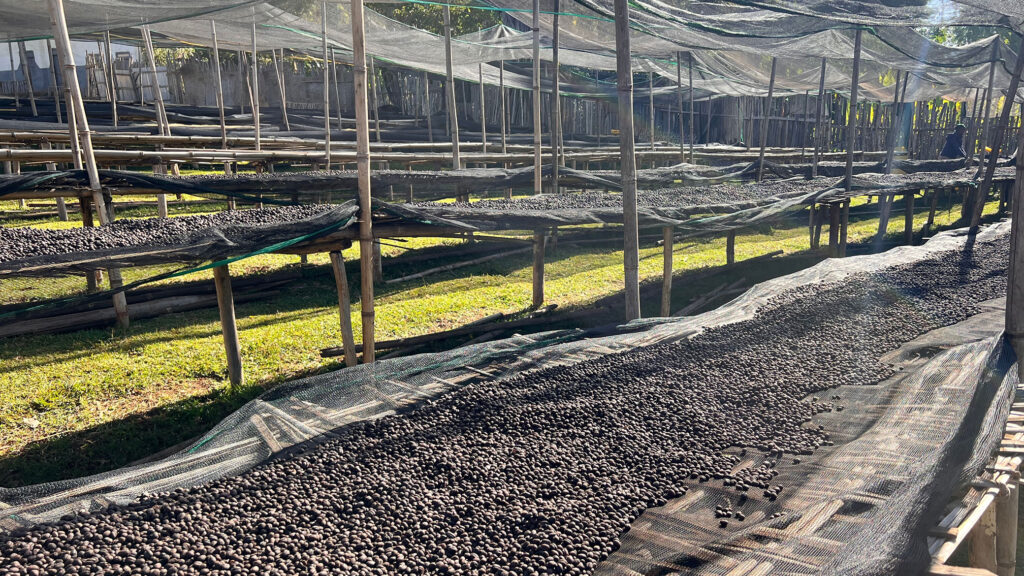
How many processes does coffee go through from seed to cup?
Like many people, they have always been curious about how is coffee produced. What needs to happen in order for us to enjoy our favourite brew? Well, someone created an infographic entitled ‘’Coffee: From Seed to Cup’’. I glad they did.

Members of the Arabica Coffee Bean Family
Classifying coffee by genetics has always been a complicated task. For the coffee varieties encountered on the market, the most basic classification, of course, is to split them into Arabica and Robusta (hereafter referred to as Robusta beans)! Regarding the differences between Arabica and Robusta, we’ll mainly talk about the lineage divisions within the large Arabica family.
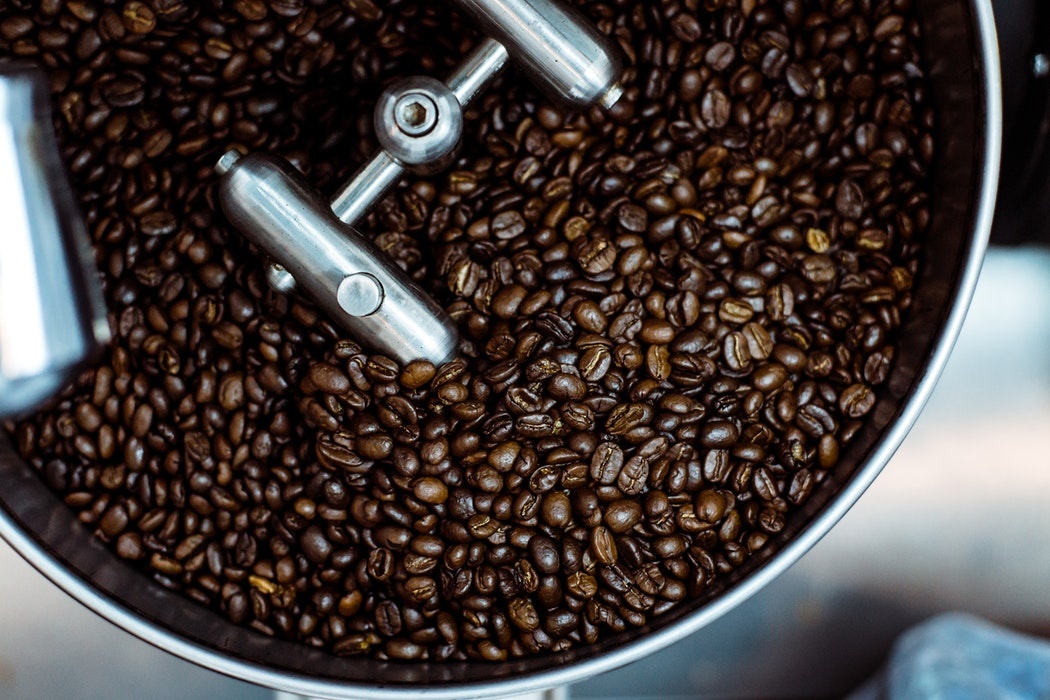
Coffee Roast Levels: Flavor & Caffeine Differences Explained
The best time to stop roasting depends on how the roaster captures the characteristics of the coffee beans. The degree of roasting should not be determined by personal preference. For example, Cuban coffee beans have thin pulp and a unique acidity and aroma.